


Black Garlic: A Chef’s Ingredient for Depth, Balance, and Modern Flavor
In a professional kitchen, the difference between a good dish and a memorable one often comes down to depth—how flavors build, layer, and finish. Black garlic has become a quiet but powerful tool for chefs looking to create that depth with consistency and control.
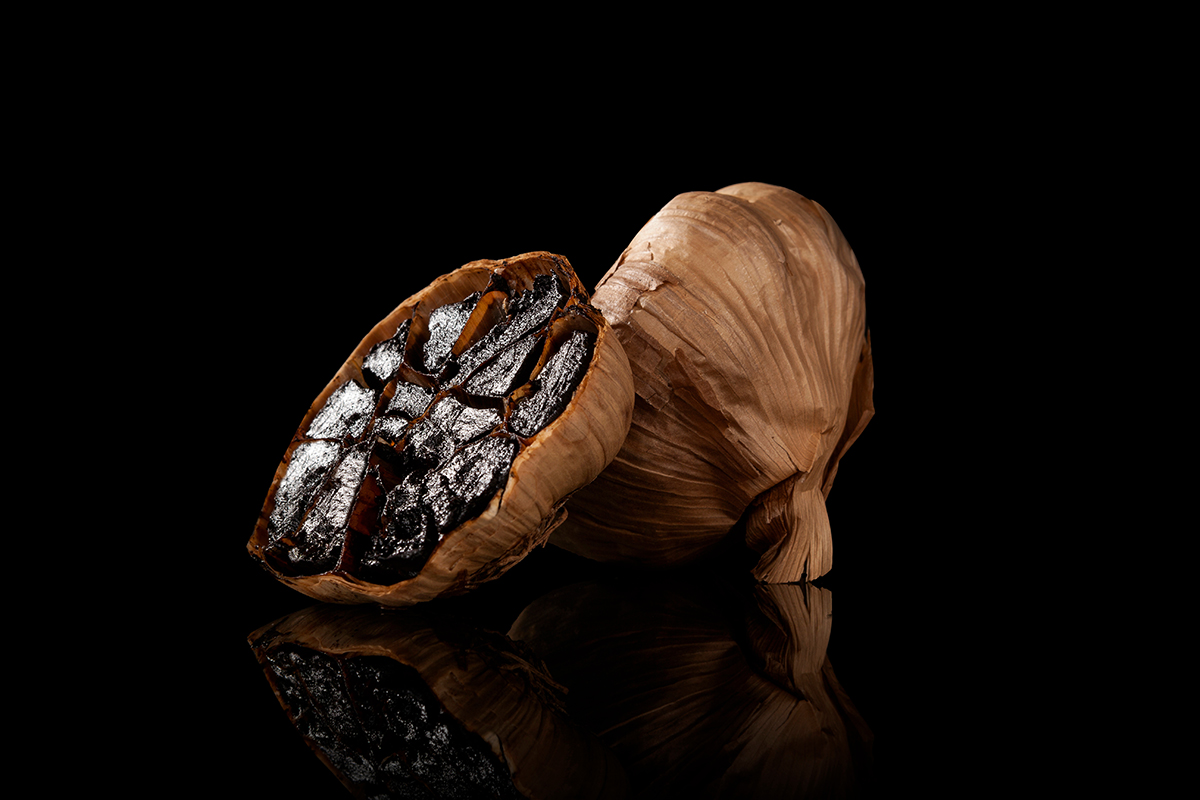
Unlike raw garlic, which brings sharpness and heat, black garlic offers a rounded, developed profile: sweet, savory, slightly tangy, and deeply umami. Its texture is soft and jam-like, allowing it to integrate seamlessly into sauces, purées, butters, and glazes without additional prep.
For chefs working across proteins, sauces, and composed plates, black garlic functions less as an accent and more as a structural ingredient—one that enhances balance while reinforcing the core identity of a dish.
What Black Garlic Is and Why It Works
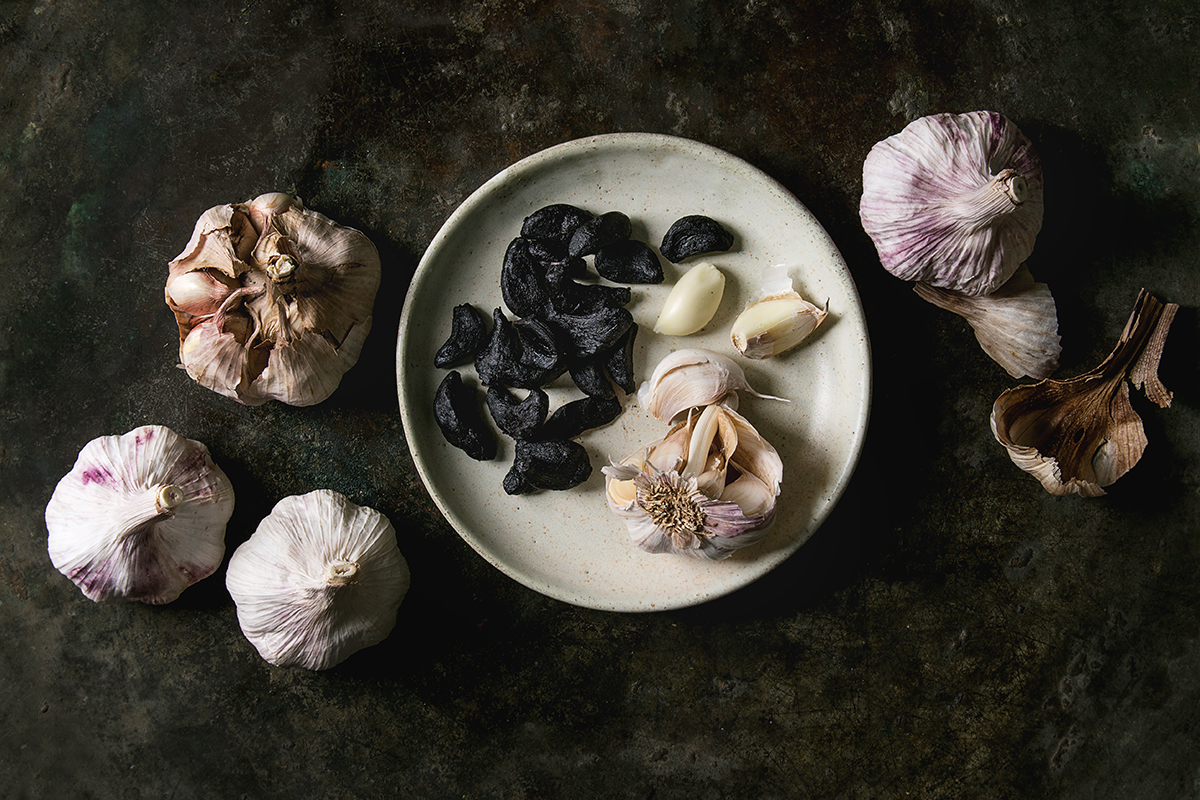
Black garlic is not a separate variety of garlic, but the result of a controlled aging process applied to fresh bulbs. Over time, under carefully managed heat and humidity, the cloves undergo chemical transformations that alter both flavor and texture.
This process is driven primarily by the Maillard reaction and enzymatic breakdown, rather than fermentation. As the cloves age, the compounds responsible for raw garlic’s pungency—particularly allicin—are reduced. In their place, new flavor compounds emerge, producing notes reminiscent of molasses, tamarind, dried fruit, and balsamic vinegar.
The result is an ingredient that feels inherently integrated rather than sharp or isolated. It dissolves easily into fats, emulsions, and liquids, making it especially effective in applications where smoothness and cohesion are important.
From a functional standpoint, black garlic behaves less like an aromatic added at the start of cooking and more like a flavor base added during composition or finishing. This distinction is what allows chefs to use it across a wide range of applications without disrupting balance.
Sourcing Matters: Mendoza Black Garlic
Quality black garlic is defined not just by flavor, but by consistency in texture, moisture, and aging profile. These factors directly influence how well it performs in the kitchen.
WorldClass sources its black garlic from Mendoza, Argentina, where bulbs undergo a carefully controlled 90-day aging process in a humidity-regulated environment. This extended timeline allows the cloves to fully develop their signature characteristics: soft, pliable texture, balanced sweetness, and deep umami complexity.
That consistency is critical in a professional setting. When a product behaves predictably, it becomes easier to scale across service, maintain flavor integrity, and integrate into multiple menu items without adjustment.
Key characteristics of high-quality black garlic:
- Soft, jam-like cloves that mash easily without resistance
- Moist but not wet texture, indicating proper aging
- Aroma with layered sweetness, mild acidity, and restrained garlic notes
- Clean finish without bitterness or burnt undertones
Understanding its unique properties is the first step toward creating the kind of memorable black garlic recipe ideas that keep guests coming back. You can dive deeper into its unique characteristics in our guide explaining what black garlic is.
Core Preparations: Building Blocks for the Kitchen
Rather than reinventing individual dishes, black garlic is best utilized through foundational preparations that can be deployed across multiple applications. These core elements allow for efficiency on the line while maintaining consistency in flavor and execution.
Black Garlic Purée
A black garlic purée is the most direct expression of the ingredient’s depth. Smooth, concentrated, and highly adaptable, it serves as a base for sauces, a finishing component, or a compositional element on the plate.
Because of its intensity, small quantities are sufficient to influence an entire dish. Its smooth texture allows it to integrate without separation, making it ideal for applications where emulsification or uniformity is important.
Common uses include:
- Enriching risottos or grain-based dishes
- Building sauce bases with immediate umami structure
- Smearing onto plates as a visual and flavor anchor
- Folding into dressings or emulsions for added depth
The key to a refined purée is achieving a smooth consistency that disperses evenly, allowing the flavor to distribute rather than concentrate in pockets.
Black Garlic Compound Butter
Compound butter remains one of the most efficient finishing tools in a chef’s repertoire, and black garlic elevates it further by introducing layered sweetness and umami.
When incorporated into softened butter, black garlic disperses evenly and melts cleanly over hot proteins, creating an immediate sauce-like effect at the moment of plating. The result is both functional and sensory—adding gloss, aroma, and depth in a single step.
Applications include:
- Finishing steaks and chops
- Enhancing roasted or grilled seafood
- Adding richness to vegetables such as mushrooms or root vegetables
- Serving as a base for composed plates where controlled melting is desired
Because compound butter can be prepped in advance and portioned consistently, it also supports service efficiency while maintaining quality.
Black Garlic Vinaigrette
In vinaigrettes, black garlic contributes both balance and complexity. Its natural sweetness softens acidic components, while its umami reinforces the overall structure of the dressing.
Unlike standard dressings that rely heavily on acidity and oil, a black garlic vinaigrette introduces an additional layer of flavor that allows it to function across more than just salads.
Use cases include:
- Dressing roasted vegetables such as carrots, squash, or beets
- Pairing with grilled seafood or poultry
- Enhancing composed salads with proteins
- Finishing chilled or room-temperature dishes that benefit from contrast
The integration of black garlic into a vinaigrette creates a more cohesive profile, reducing the need for additional seasoning layers at the plate level.
Developing Sauces and Glazes with Black Garlic
Once core preparations are established, black garlic becomes especially powerful in sauces and glazes—where it can contribute structure, depth, and finish.
Black Garlic Miso Glaze
A black garlic miso glaze combines salt, sweetness, and umami into a unified component that performs particularly well with rich seafood.
When applied correctly, it caramelizes during cooking, forming a glossy exterior that enhances both flavor and presentation. The key is timing—applying the glaze toward the end of cooking to prevent burning while allowing sufficient heat to activate caramelization.
Best suited for:
- Fatty fish such as black cod or sea bass
- Roasted eggplant or similar vegetables
- Composed seafood dishes where glaze adhesion is important
The interplay between miso and black garlic creates a layered umami profile that reinforces the natural richness of the protein.
Black Garlic Balsamic Reduction
For proteins with stronger flavor and higher fat content, a black garlic balsamic reduction provides balance through acidity and sweetness.
This type of reduction is particularly effective in grounding dishes, offering both viscosity and brightness. When reduced to the proper consistency, it coats the back of a spoon and adheres well to plated components without overwhelming them. For a perfectly smooth blend right from the start, a pre-made Mendoza black garlic paste is a great shortcut.
Applications include:
- Lamb
- Ibérico pork
- Grilled or roasted beef cuts
The addition of black garlic introduces depth that extends the finish of the sauce, making it more than just a reduction of acidity and sugar.
Black Garlic Aioli
In emulsified sauces like aioli, black garlic contributes both body and flavor complexity. The result is a richer, more nuanced condiment that can stand on its own or complement a wide range of dishes.
Because aioli is often used as a finishing or accompanying element, black garlic’s smooth texture integrates easily without altering the stability of the emulsion.
Common uses:
- Serving alongside grilled proteins
- Accompanying fried seafood
- Enhancing vegetable-forward dishes
- Acting as a base for composed plates or small bites
Its versatility makes it a valuable addition for menus that require consistency across multiple applications.
Pairing Black Garlic with Premium Proteins
Now we move into pairings where black garlic plays a more direct role—the kind of supporting character that quietly elevates a dish without drawing attention to itself. Its ability to layer sweetness, umami, and a subtle fermented tang makes it especially effective alongside premium proteins, where balance and restraint matter just as much as intensity.
The goal here isn’t to mask the quality of the ingredient. It’s to create a sense of harmony that brings everything into focus. With proteins of this caliber, precision is essential. Temperature control, timing, and restraint in application all determine whether black garlic integrates seamlessly or becomes overly dominant. When used correctly, it can cut through richness, highlight natural sweetness, and add a grounding depth that ties the plate together.
Elevating Black Angus Ribeye
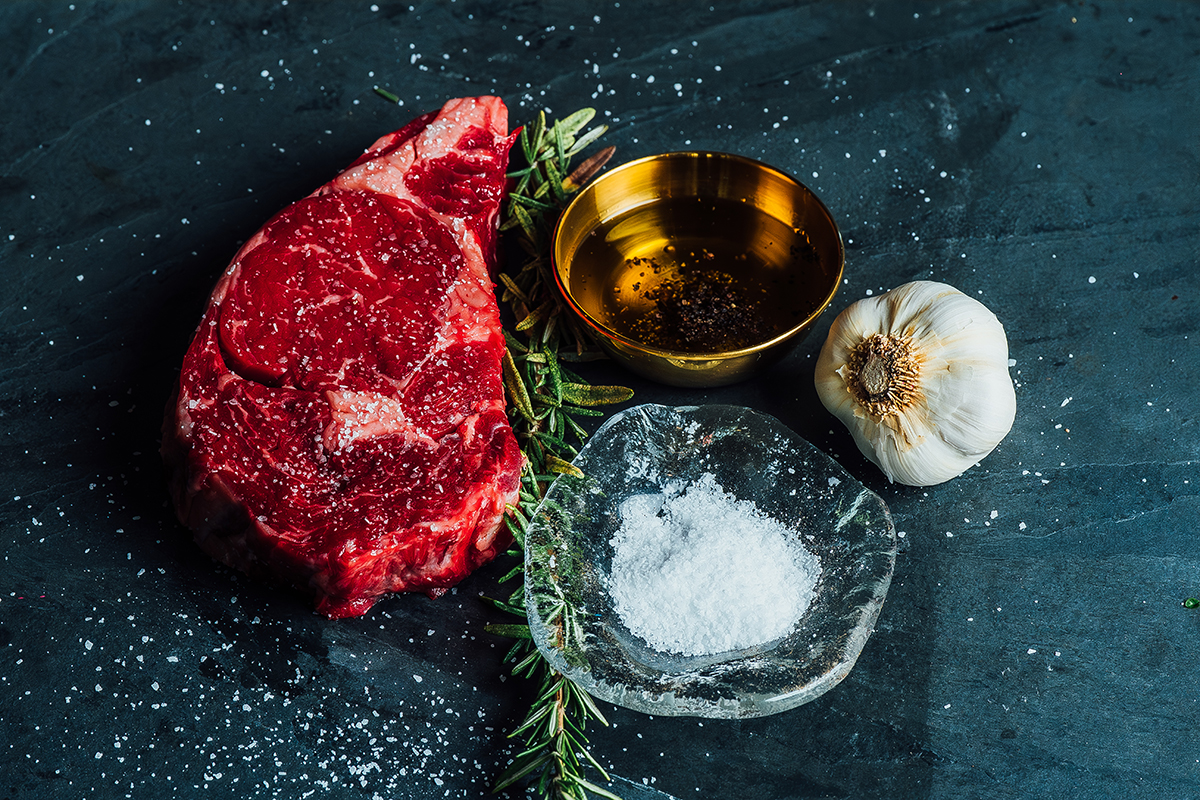
A Black Angus ribeye, with its deep marbling and pronounced beef flavor, provides an ideal foundation for a black garlic butter crust. Rather than simply finishing with butter, this approach builds a textured layer that adds both structure and aromatic intensity at the final moment of service.
After searing a thick-cut ribeye to medium-rare (around 52°C / 125°F) and allowing it to rest properly, the finishing component is applied.
Butter crust method:
- Combine room-temperature butter with black garlic paste, panko breadcrumbs, finely grated Parmesan, and chopped parsley
- Mix until fully incorporated, ensuring the texture is cohesive but still spreadable
- Apply a thin, even layer across the surface of the rested steak
- Place under a hot broiler or salamander for 30–45 seconds, just until the panko is golden and the surface is fragrant
The result is a layered finish that contrasts texture and richness. The panko introduces light crispness, the Parmesan melts into the butterfat, and the black garlic integrates throughout, adding sweetness and umami that cut through the ribeye’s natural fat. It’s a simple adjustment that significantly enhances both aroma and mouthfeel without complicating execution.
Balancing the Richness of Ibérico Pork
Ibérico pork, particularly cuts like Secreto, is known for its intense marbling and nutty, almost buttery flavor. That richness is what makes it exceptional—but it also requires balance to keep the dish from feeling overly heavy. Black garlic is well-suited here because of its ability to introduce subtle acidity, sweetness, and depth without overwhelming the protein.
A restrained dry rub allows the pork to remain the focal point while gently enhancing its natural characteristics.
Dry rub approach:
- Combine black garlic (powdered or finely minced), smoked paprika, and a small amount of fennel seed
- Pat the pork dry and apply the rub evenly across the surface
- Sear quickly over high heat on a plancha or cast iron, about 2–3 minutes per side
The goal is a strong exterior crust with a properly rendered interior that remains juicy and pink. During searing, the natural sugars in the black garlic begin to caramelize, reinforcing the Maillard reaction and contributing to a deep, savory crust.
The interaction between the black garlic’s molasses-like notes and the pork’s acorn-fed fat creates a balanced profile—rich, but not heavy; complex, but still clean. It’s a pairing that feels both rustic in execution and refined in result.
Delicate Pairings with New Zealand Scampi
With delicate seafood like New Zealand scampi, restraint becomes the defining principle. The sweetness and texture of the scampi are subtle, and any heavy-handed application of black garlic can quickly overpower those qualities. Here, black garlic is best used in a supporting sauce that enhances rather than dominates.
A black garlic beurre blanc offers the right balance of richness, acidity, and umami, while maintaining a light overall profile.
Beurre blanc method:
- Gently reduce dry white wine with finely chopped black garlic over low heat
- Once reduced, remove from heat and gradually whisk in cold, cubed butter to form an emulsion
- Adjust with a small amount of lemon juice and salt to finish
Pan-sear the scampi tails briefly—about 2–3 minutes total—just until opaque and tender. Spoon the beurre blanc over the top or around the plate, allowing the sauce to complement the natural sweetness of the seafood.
The black garlic integrates into the reduction, contributing a subtle depth that enhances the scampi without obscuring its character. The butter provides body, while the acidity keeps the dish lifted and balanced. In this context, black garlic should remain understated—present, but never dominant.
An Avant-Garde Touch for Caviar
Black garlic can also find a place alongside highly refined, luxury ingredients such as caviar. In this context, the objective is not transformation, but subtle enhancement. Even a small amount of black garlic can introduce a contrasting sweetness that highlights the briny, mineral qualities of the roe.
A minimal, controlled application is key.
Application approach:
- Fold a very small amount of black garlic purée into crème fraîche
- Use this mixture as a base or accompaniment for caviar service
- Apply sparingly to maintain clarity of flavor
The sweetness of the black garlic provides a quiet counterpoint to the salinity of the caviar, while the crème fraîche adds a neutral, creamy texture that supports both elements. When plated carefully, this combination creates a composed bite where each component remains distinct, yet interconnected.
This is a high-precision pairing that relies on restraint and proportion. Used correctly, black garlic enhances the perception of richness and complexity without interfering with the clean finish that defines high-quality caviar. Explore WorldClass caviar varieties here.
Workflow, Storage, and Kitchen Efficiency
Incorporating black garlic into a kitchen requires minimal operational adjustment when handled correctly.
Whole bulbs should be stored in a cool, dry environment for short-term use, or refrigerated for extended shelf life.
Purée can be refrigerated in airtight containers for short-term use, or portioned and frozen for longer storage.
Infused preparations such as oils should be handled carefully and stored under refrigeration, with attention to food safety guidelines.
Because black garlic is highly concentrated, usage per dish is typically low, making it a cost-efficient ingredient when evaluated on a per-application basis rather than per-unit price.
From a workflow perspective, having pre-prepared purées, butters, and sauces allows for consistency during service while reducing prep time on the line.
Bringing Black Garlic Into Your Menu
Black garlic is not simply an ingredient—it is a tool for building flavor with intention. Its ability to integrate into sauces, enhance proteins, and add depth without disruption makes it particularly well suited for modern kitchens focused on consistency and quality.
When sourced and applied correctly, it allows chefs to:
- Develop signature dishes with layered flavor profiles
- Maintain efficiency across prep and service
- Enhance premium ingredients without overshadowing them
- Create balance across sweet, savory, acidic, and umami elements
For kitchens looking to incorporate globally sourced, chef-driven ingredients, WorldClass black garlic offers a consistent foundation to build from.
Explore the full collection here: https://www.worldclass.com/products.


.webp)


