
-p-2000.jpg)


How to Serve Jamón Ibérico: A Chef's Guide to Carving, Plating, and Pairing
Serving Jamón Ibérico is a ritual. It's about more than carving meat — it's an act of respect for an extraordinary product, and it all begins long before the first slice hits the plate.
The process starts with choosing the right ham and preparing it with intention. These foundational steps are what separate a good tasting from a truly unforgettable one.
Selecting and Preparing Your Jamón Ibérico
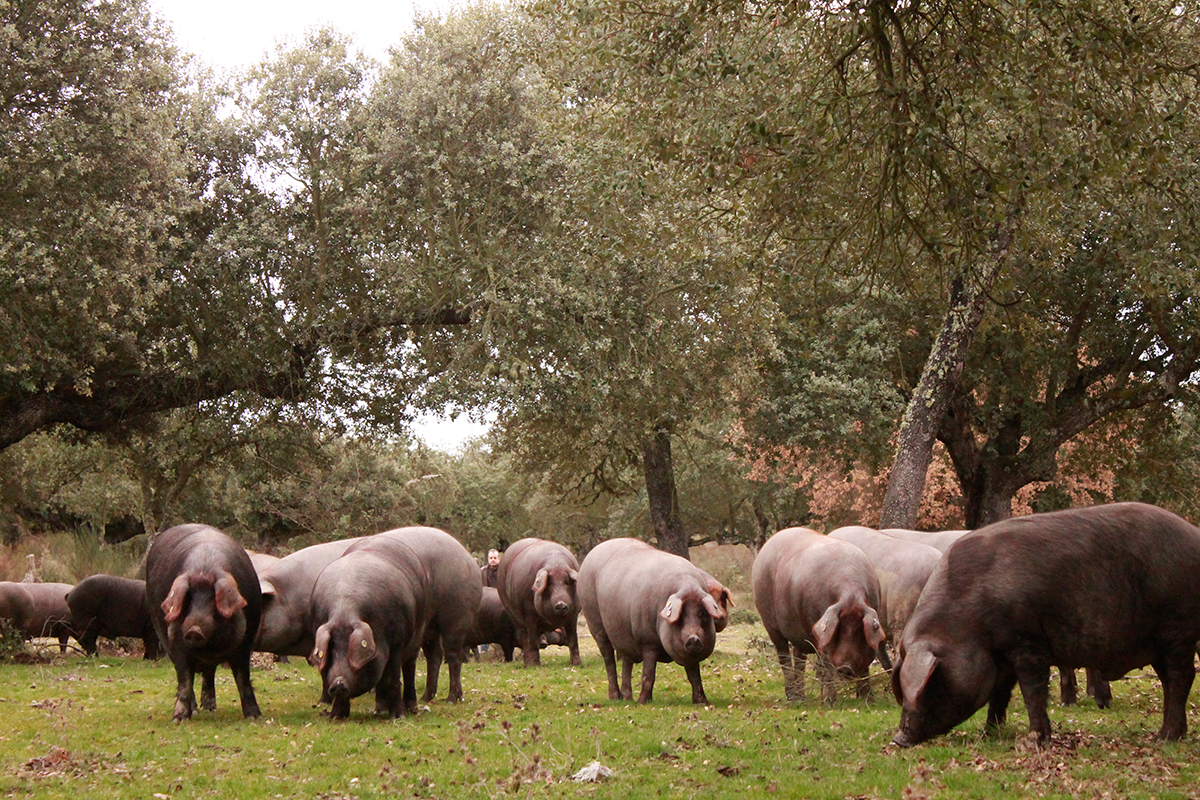
Your choice of ham sets the entire stage. While several grades exist, the pinnacle is Bellota 100% Ibérico — from pure-bred Iberian pigs that have foraged on acorns (bellotas) in Spain's open dehesa landscapes. That diet is what creates the ham's signature nutty flavor and a high concentration of oleic acid, giving the fat its glorious, melt-in-your-mouth quality.
At WorldClass, we source our Jamón Ibérico directly from Fermín, based in La Alberca, Salamanca — a family operation founded in 1956 that was the first company authorized to export Ibérico products to the United States, in 2005. Their pigs are raised at Finca Los Helechales, a 100% genetically selected Ibérico farm, free-ranging in the pristine Dehesa ecosystem bordering Portugal. No antibiotics, no growth-promoting hormones — just an animal raised the way it was meant to be, on pure soils free from synthetic fertilizers and pesticides. That commitment to process is exactly what you taste on the plate. We explore how to get a handle on all the different classifications in our Jamón Ibérico labeling guide.
Once you have your leg, preparation is everything. You'll need a proper jamonero (ham holder) to secure it. This isn't just for show — it's a non-negotiable tool for both safety and precision. A stable ham is the only way to achieve controlled, even slices.
The First Cuts Matter
Before you can think about paper-thin slices, you have to prep the surface with a "cleaning" cut to remove the inedible outer layers.
- Outer Rind: Remove the hard, dark outer rind — it's inedible and must go first.
- Yellow Fat: Just below the rind sits a layer of oxidized, yellowish fat. This part is bitter and will ruin the meat's flavor if left behind. Remove it completely.
- White Fat: As you trim deeper, you'll reach the creamy white fat. Save this — you'll use slices of it later to cover the exposed meat and prevent it from drying out.
A common mistake is not removing enough of the yellow fat. Its rancid bite can completely overpower the delicate, sweet notes of the meat beneath. Trim until you see only pristine white fat and deep red muscle.
Choosing Your Starting Point
With the ham cleaned, you have a strategic choice: where to begin carving? The leg has two main sections, and your decision should be based entirely on how fast you plan to serve it.
- The Maza: The larger, rounder, more marbled side. It gives you juicier, more tender slices — the best place to start if you're serving a crowd or moving through the leg quickly.
- The Babilla: The leaner, flatter side with less fat. It cures faster and can dry out sooner. If you're serving the ham slowly over several weeks, start here — it lets you save the more succulent maza for later, ensuring it stays perfectly moist when you get to it.
Place the leg in the jamonero hoof-up to access the maza, or hoof-down for the babilla. This initial setup dictates not only the quality of your first slices, but the longevity and yield of the entire leg.
Mastering the Carving Technique
Carving Jamón Ibérico is less about muscle and more about ritual. Forget a standard chef's knife — this is a slow, deliberate craft where precision unlocks the full spectrum of flavor and texture.
The goal isn't simply to cut ham. It's to produce consistently nearly translucent slivers that melt the moment they touch the palate. This is how you honor a product that has taken years — sometimes decades — to create.
The Right Tools
The star of the show is the cuchillo jamonero — a long, slender, flexible knife built for this one purpose. Its flexibility allows it to bend and glide along the contours of the meat, producing paper-thin slices.
You'll also need:
- A Paring Knife: A short, rigid blade for initial deep cuts around the bone and for trimming rind and excess fat.
- A Sharpening Steel (chaira): A razor-sharp edge is non-negotiable. Hone your cuchillo jamonero frequently during service — every slice should be smooth, clean, and controlled.
- Tongs or a Fork: Handle finished slices without your hands. This keeps the delicate structure intact and ensures a clean presentation.
The Perfect Slice
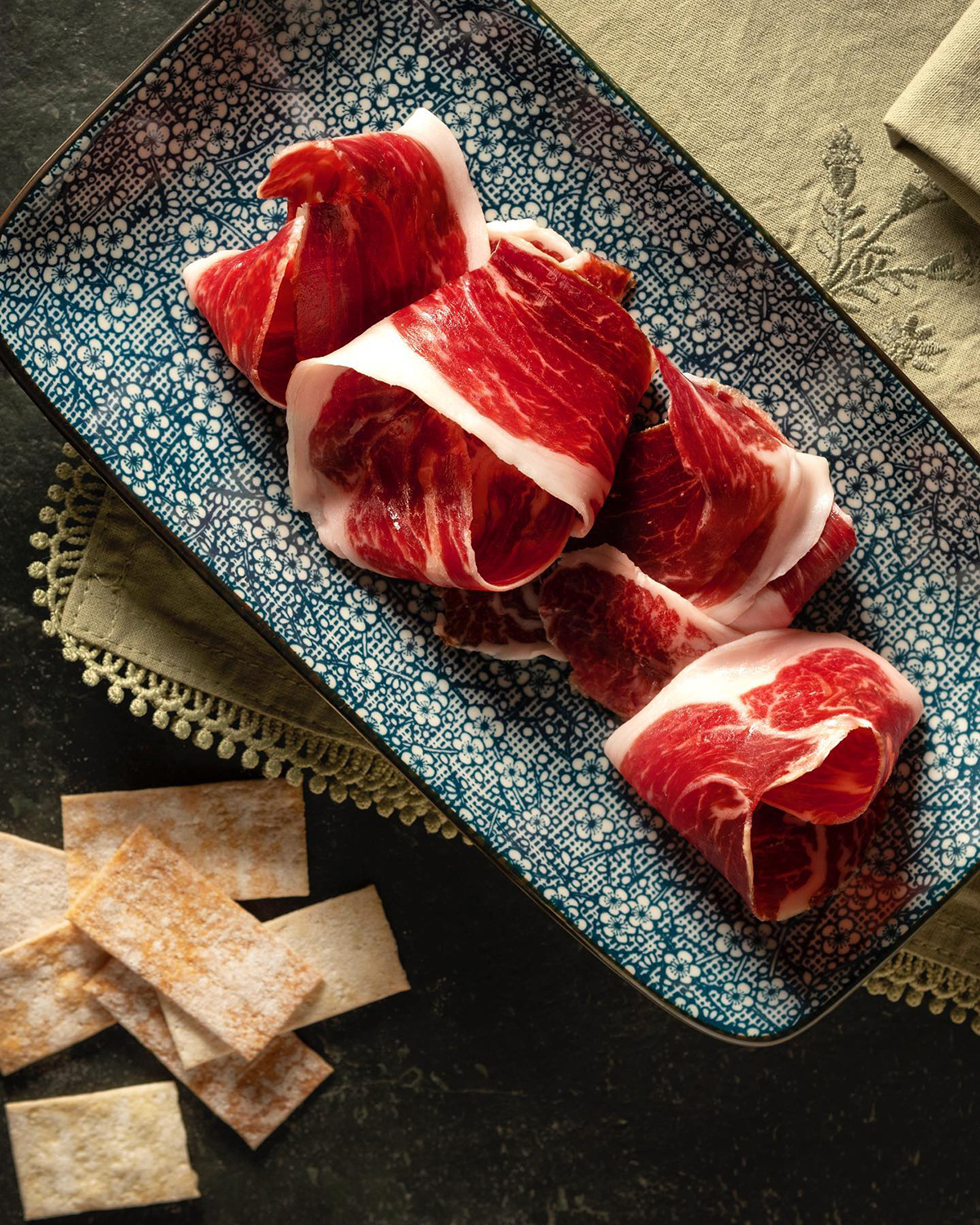
A perfect slice of Jamón Ibérico is a delicate balance of lean muscle and glistening, nutty fat — roughly the size of a credit card, thin enough to be almost translucent. This allows the fat to warm instantly on the tongue, releasing its full, complex aroma.
Use a gentle, back-and-forth sawing motion with the full length of the blade, keeping the knife as flat and parallel to the surface as possible. Don't press down — that tears the muscle fibers and produces thick, clumsy pieces. Let the sharpness of the blade do the work.
Safety First: Always keep your non-dominant hand behind the knife's cutting path. A slip with a blade this sharp is serious.
Working Around the Bone
As you carve deeper, you'll hit the hip bone (cadera). This is where yield gets compromised if you're not careful. Don't try to carve over it. Use your small paring knife to carefully cut around the bone's entire contour, isolating it and freeing up the surrounding meat for continued clean slicing.
A full leg yields roughly 45% edible meat — the remaining 55% is bone, rind, and trim. None of it is waste. All of it goes back into the kitchen (more on that below).
Maintaining a Flat Cutting Surface
One of the most important things to manage during carving is keeping the surface level. If you let a dip or "U" shape form in the middle, the knife will catch, and you'll end up with thick, uneven chunks just to compensate.
To keep it flat:
- Always start each slice from the outermost edge (closest to the hoof) and draw the knife smoothly toward you.
- Work evenly across the full surface, moving side to side.
- If one area is getting lower than another, focus your next few slices on the higher sections to level it back out.
This methodical approach doesn't just produce beautiful, consistent slices — it makes the process safer and more efficient, turning what could be a chore into a performance.
Temperature and Plating: Where Jamón Becomes an Experience
You've mastered the slice. Now comes the part where art meets science. Serving temperature and plating aren't finishing details — they're the difference between simply eating jamón and truly tasting it.
The secret to Jamón Ibérico de Bellota's legendary depth is its rich intramuscular fat, loaded with oleic acid developed through a life spent foraging acorns. But that fat is incredibly sensitive. Serve it too cold and it's waxy, locking away all those complex nutty aromas. Too warm and it turns greasy, losing its elegant structure entirely.
The Magic Temperature Window
The ideal serving temperature is 18–22°C (64–72°F). At this range, the fat begins to glisten and "sweat" — that's your visual cue. It signals the fat has reached its melting point, ready to dissolve on the palate and release the nutty, umami-rich flavors developed over a 24–48 month cure.
For pre-sliced, vacuum-packed jamón, pull it from the cooler at least one to two hours before service to let it fully acclimate.
A pro tip from the kitchen: Lay a slice on the back of your hand. If it warms slightly and the fat turns translucent within a few seconds, it's ready.
Plating and Presentation
With your slices at the right temperature, presentation is your final flourish. The goal is simple: arrange the jamón so each slice can be lifted cleanly without tearing.
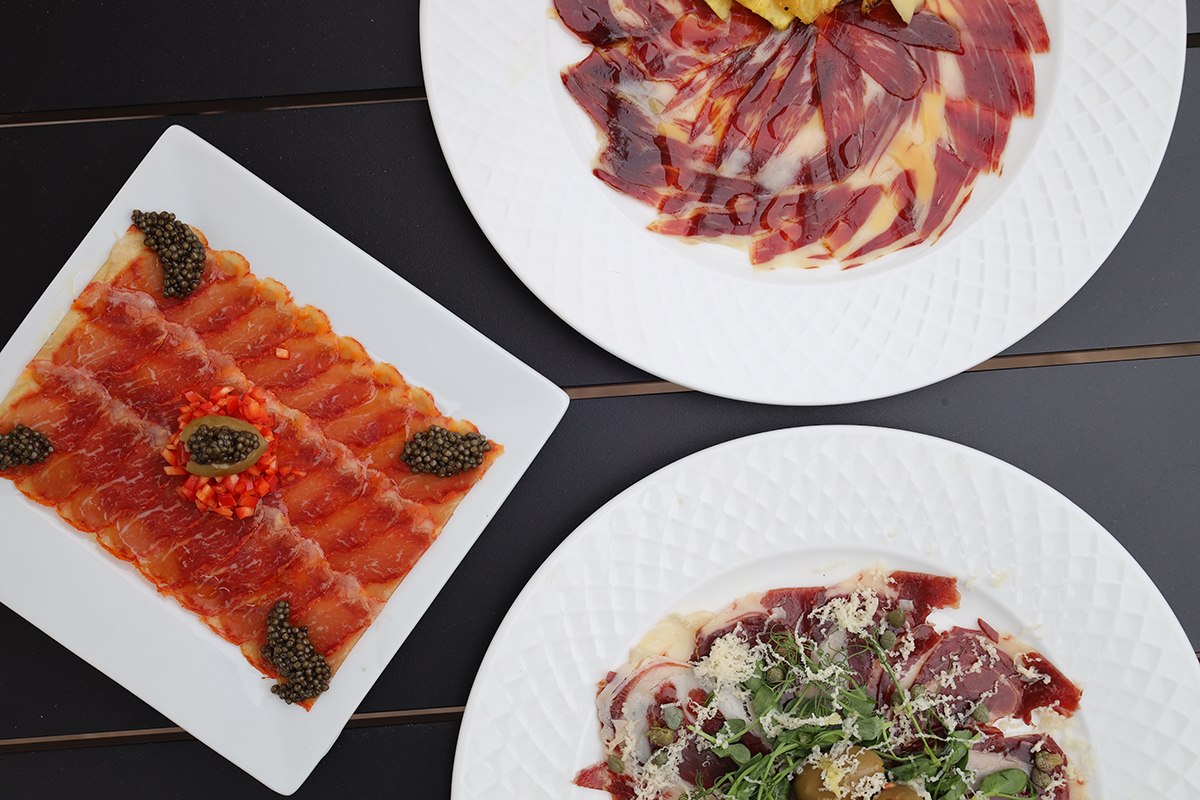
The classic method is the emplatado circular — slices arranged in a single, slightly overlapping layer around the rim of a warm plate, working outside in to create a flower effect. Every slice stays distinct.
For a more contemporary presentation:
- Linear Arrangement: On a rectangular slate or wooden board, slices in a neat overlapping row. Minimalist, and lets the jamón speak for itself.
- Cascading Style: Let slices fall naturally over a rustic piece of bread or a small pedestal on the plate — drama without fuss.
- Individual Portions: For tasting menus or canapés, a single perfectly folded slice on a pico (small Spanish breadstick) or a sliver of pan de cristal is all you need.
Portioning and Pacing
A standard ración runs 50–100 grams (1.5–3.5 oz), but context is everything.
- Tasting Menu: 15–20 grams — enough to showcase quality as one part of a larger experience.
- Charcuterie Board: 30–40 grams per person when served alongside other meats and cheeses.
- Bar Tapa: Around 25–30 grams, served simply on a small plate.
Jamón Ibérico is best eaten moments after it's sliced. During service, plate in small batches rather than pre-plating a large quantity — every guest should receive their serving at its absolute peak.
Curating Expert Accompaniments and Wine Pairings
A paper-thin slice of Jamón Ibérico needs no help to be incredible. But the right accompaniments can turn a great bite into something memorable. The goal isn't to add flavor — it's to create contrast. You want partners that cut through the richness, cleanse the palate, and highlight the ham's complex, nutty character. Think acidity, sweetness, and crunch against that melting fat.
Classic Food Pairings, Executed with Precision
The best pairings are rooted in Spanish tradition. They let the jamón remain the star, but a chef's precision in execution makes all the difference.
Take pan con tomate. Anyone can rub bread with tomato. Elevate it — use true pan de cristal, known for its impossibly light crumb and shatteringly crisp crust. Toast it, rub with a ripe, high-quality tomato, and finish with a drizzle of single-varietal Arbequina olive oil for its gentle peppery finish.
A few other essential partners:
- Picos and Regañás: Small, crunchy Spanish breadsticks — a brittle, neutral base that is the perfect foil for the ham's soft texture.
- Fresh or Dried Figs: The honeyed sweetness of a ripe fig against salty, savory jamón is a near-perfect sweet-and-salty pairing, especially with acorn-finished Bellota grades.
- Marcona Almonds: Lightly fried in olive oil, salted. Their buttery crunch amplifies the nutty notes inherent in the jamón itself.
For a more substantial offering, a firm Spanish cheese adds another layer of savory depth without competing. WorldClass carries Galan Manchego — a semi-cured PDO Manchego from La Mancha, Spain, with a smooth, elastic body and a flavor profile that's buttery and nutty with gentle grassy notes and a hint of tang. It's a natural partner. You can learn more about the art of composition in our guide to building a world-class cheese board.
The Quintessential Pairing: Sherry
If there is one perfect partner for Jamón Ibérico, it's sherry. Specifically, a bone-dry Fino or Manzanilla.
These fortified wines come from Andalusia, the same region that produces some of Spain's finest jamones. The wine's crisp acidity, notes of almond and sea brine, cut straight through the richness of the fat. Biologically aged under a veil of yeast called flor, sherry develops a saline quality that mirrors the ham's cure and cleanses the palate after every bite — resetting it, perfectly, for the next.
What to avoid: Big, bold, high-tannin reds. A young Cabernet Sauvignon or Syrah will completely overpower the jamón, masking the delicate, acorn-fed character the ham spent years developing. The wine is always in service to the ham.
Proper Storage and Maximizing Kitchen Yield
A whole Jamón Ibérico is a serious investment — in cost and in culinary potential. Once you've made the first cut, your job is to protect that investment. This isn't just about preventing spoilage; it's about preserving the ham's texture and complex flavor for weeks.
After service, shield the exposed meat from air immediately. Take the larger pieces of fat and rind you trimmed off earlier and lay them right back over the cut surface — a natural, custom-fit cover that prevents drying and oxidation.
Then wrap the entire leg loosely in something breathable: a clean kitchen towel or cheesecloth. Avoid plastic wrap entirely. It traps moisture, creates a humid environment, and turns the texture gummy.
The Right Environment
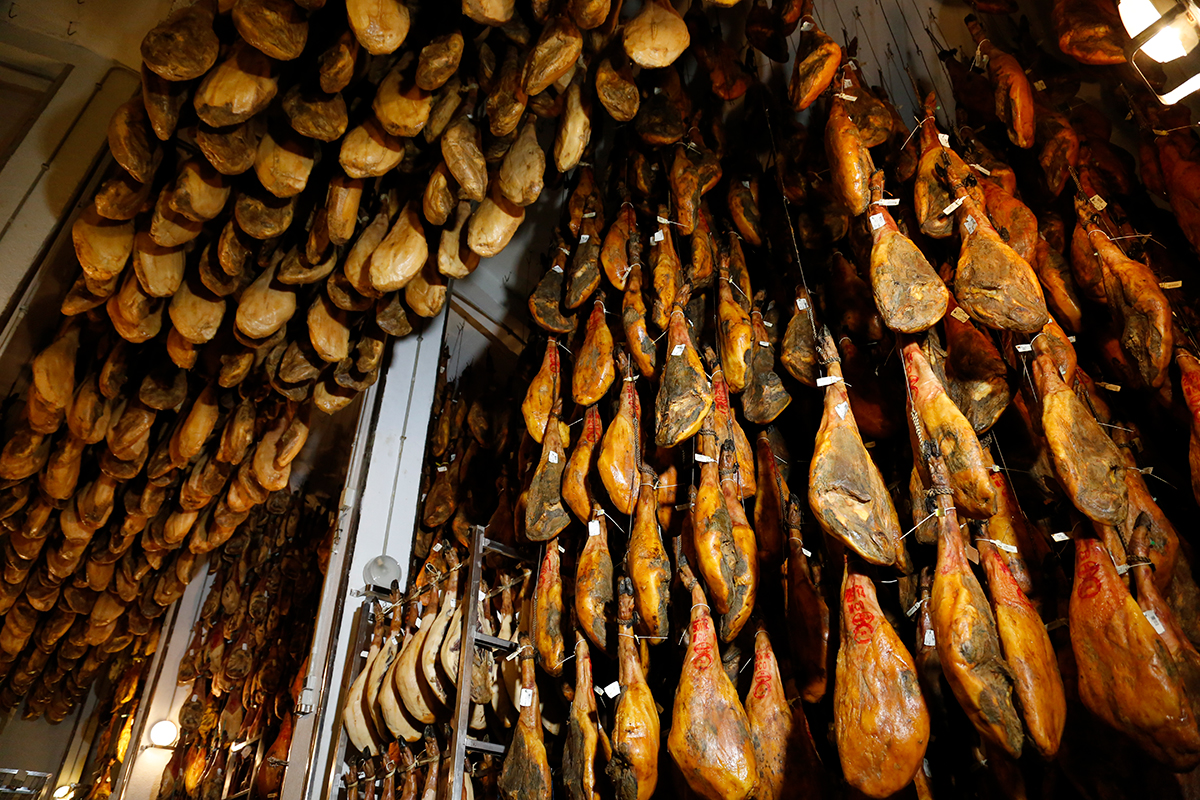
The ideal home for your jamón is a cool, dry, well-ventilated spot — away from direct sunlight and the heat of the line. A professional kitchen's dry storage area or a traditional pantry works perfectly. The goal is to replicate the conditions of the Spanish bodegas where the ham was cured.
Never refrigerate a whole or bone-in ham. The cold solidifies the fat, dulling its flavor and creating a waxy, unpleasant mouthfeel. Refrigeration is only appropriate for pre-sliced, vacuum-sealed packs.
Surface Mold: Don't Panic
A fine, powdery white or greenish mold on the outside of the ham is completely normal — a harmless byproduct of the curing process, much like the bloom on an artisanal salami. Before your next carving session, simply wipe it away with a clean cloth dampened with a little olive oil.
A Zero-Waste Philosophy
In a professional kitchen, yield is profit. With a high-value product like Jamón Ibérico, nothing should reach the bin. Every part of this leg — from the smallest carving trimmings to the bone itself — is a valuable ingredient.
- Croquetas de Jamón: Finely dice the small, irregular bits of meat from around the bone. Fold them into a rich béchamel and you have one of Spain's most iconic tapas — a perfect use for flavorful morsels that aren't plate-ready on their own.
- Infused Oils: Gently warm the fat trimmings in a quality olive oil. The fat renders and infuses the oil with a smoky, nutty essence — use it to finish roasted vegetables, drizzle over puréed soups, or build a vinaigrette guests will remember.
Jamón Broth (Caldo): The bone is a flavor bomb. Once the meat is gone, simmer it with aromatics to create a profoundly deep, savory broth — the ideal foundation for soups, stews, and pan sauces.
WorldClass Sourcing: Our Jamón & Ibérico Products
At WorldClass, we source our Jamón Ibérico and cured Ibérico products from Embutidos Fermín — one of Spain's most respected and pioneering producers.
Based in La Alberca, a historic village in the Sierra de Francia mountain range of Salamanca, Fermín was founded in 1956 by Fermín Martín and Victoriana Gómez, who built the business on traditional knowledge of raising and curing Ibérico pigs in the Dehesa ecosystem. Today, managed by the second generation — Santiago and Francisca — Fermín controls the entire production process across facilities in La Alberca and Tamames, using time-honored methods: salt curing, slow aging, and natural drying in open-air facilities shaped by mountain climate.
Their pigs are Iberian, free-ranging in pure soils free from synthetic fertilizers and pesticides. No antibiotics, no growth-promoting hormones. Fermín was the first company authorized to export Ibérico products to the United States (2005) and later became the first to export certified organic Ibérico pork — setting the standard for quality, traceability, and stewardship of this centuries-old craft.
We carry a focused selection across formats:
- Whole Jamón Legs — bone-in, acorn-fed Ibérico legs for carving programs, events, and immersive service moments
- Pre-Sliced Jamón & Shoulder — precision-sliced packs delivering consistency, ease of service, and optimal yield without sacrificing quality
- Cured Ibérico Products (Embutidos) — chorizo, salchichón, salami, and coppa, crafted using traditional curing methods, designed for versatility across menus and charcuterie formats
Your Jamón Ibérico Questions, Answered
Even for seasoned chefs, serving a whole leg can raise questions mid-service. Here are direct answers to the most common ones.
What are the white spots on Jamón Ibérico? Small, chalky white dots in the muscle are not a defect — they're a hallmark of quality. Those specks are tyrosine crystals, amino acids that form naturally during the long aging process. They're safe to eat and add a subtle, pleasant crunch. Seeing them is a sign of authentic, patient craftsmanship.
Can I serve pre-sliced Jamón Ibérico? Absolutely. For many kitchens, top-tier vacuum-packed jamón is the smart operational choice — consistent portion control and efficiency without compromising the experience, as long as you handle it correctly. Pull the package from the cooler at least 20–30 minutes before service, gently separate the slices, and let them rest another 5–10 minutes at room temperature. You'll know they're ready when the fat starts to glisten.
How long does a jamón leg last after cutting? With proper care, an opened leg will stay in prime condition for 4 to 6 weeks. Cover the exposed surface with slices of its own fat and rind after every service, drape a breathable cloth over the leg, and keep it in a cool, dry spot away from heat. Slicing a small amount daily keeps the cut surface fresh and prevents oxidation.
What part of the ham should I slice first? It depends entirely on your pace of service. For a fast turnaround — a big event, or if you expect to use the leg within a couple of weeks — start with the maza. It's juicier, more marbled, and gives you broader, more impressive slices. If you're serving slowly over several weeks, start with the babilla. It has less fat and dries out faster, so using it first lets you save the more succulent maza for when you need it most.
At WorldClass, we understand that exceptional ingredients are the foundation of any great menu. We source our Jamón Ibérico directly from the finest artisan producers in Spain, Fermín Ibérico ensuring every leg meets the highest standards of quality and tradition. Discover the difference that true traceability makes by exploring our collection.


