
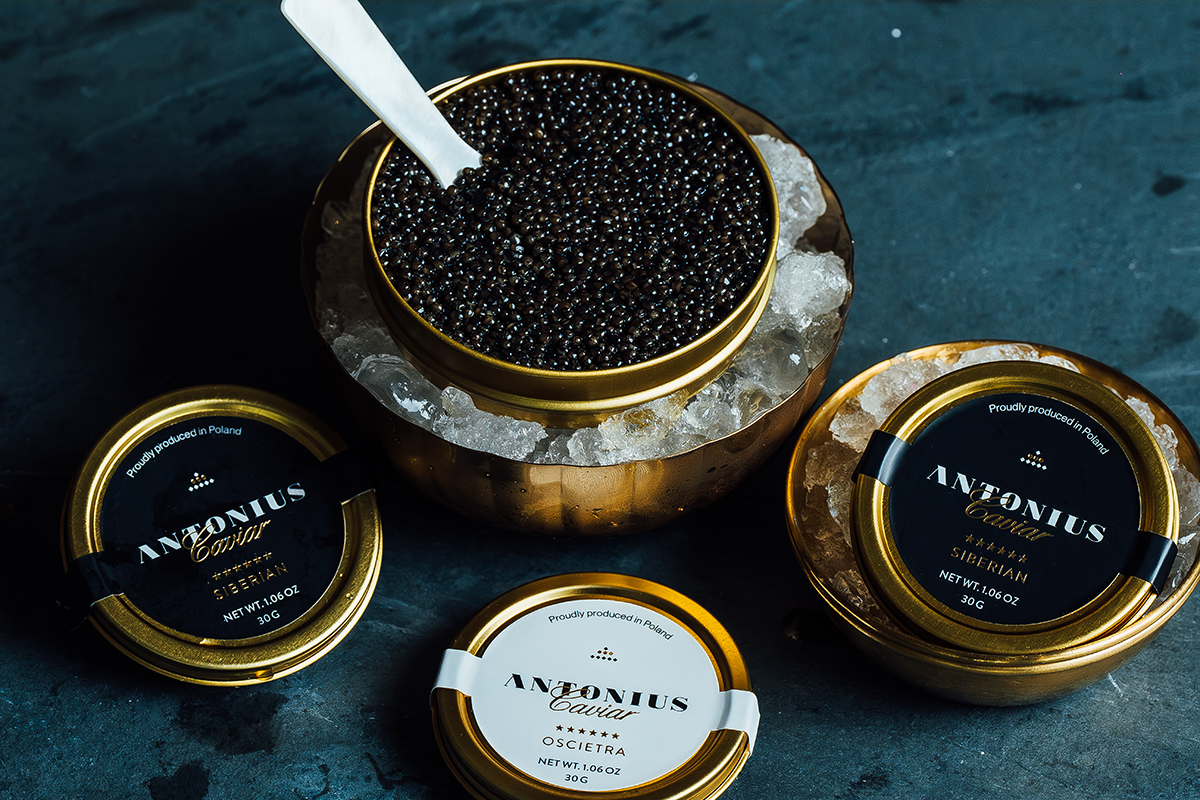


Understanding the Fish Behind the Pearls
Caviar has long carried an aura of luxury, but in a professional kitchen it represents something more meaningful: sourcing, craftsmanship, and culinary intention. Understanding the different types of caviar fish—the sturgeon species that produce these prized pearls—allows chefs to move beyond prestige and toward deliberate ingredient selection.
Each variety offers its own character. Some deliver rich, buttery elegance, while others provide sharp briny intensity or subtle nutty depth. These differences influence not only how caviar is served, but how it integrates into a dish, whether as a centerpiece ingredient or a refined finishing element.
For chefs building a thoughtful caviar program, a few key factors matter most:
- Egg characteristics: size, color, texture, and flavor
- Culinary versatility: how the roe performs in plating and service
- Market positioning: premium statement varieties vs. accessible luxury
- Sourcing and sustainability: traceable aquaculture and responsible harvesting
With modern aquaculture producing exceptional sturgeon roe around the world, chefs now have more reliable access to high-quality caviar than ever before. Understanding these varieties allows kitchens to select the right product for the right application—balancing luxury, versatility, and responsible sourcing.
Beluga Caviar (Huso huso)
Beluga caviar is widely considered the pinnacle of the caviar world. Produced by the massive Huso huso sturgeon, historically native to the Caspian Sea, it is defined by its rarity, size, and delicate flavor.
These ancient fish can live for over a century and grow to remarkable proportions, producing the largest and most sought-after eggs in the caviar category. For chefs, Beluga represents the highest expression of refinement.
Egg Characteristics and Flavor
Beluga pearls are the largest among traditional caviars, typically measuring 3–3.5 mm.
Their color ranges from pale silvery gray to deep black, often with a luminous sheen.
Flavor is defined by restraint and elegance:
- buttery, creamy texture
- delicate brine
- subtle nutty undertones
- long, clean finish
The thin membrane allows the pearls to melt almost instantly on the palate, creating the signature luxurious mouthfeel associated with Beluga.
Chef Insight
Beluga’s defining trait is subtlety. The goal when serving it is not to build complexity around it, but to allow the roe itself to remain the focal point.
Culinary Applications
Beluga is most often served with minimal accompaniment to preserve its delicate flavor.
Classic service includes:
- chilled presentation over crushed ice
- mother-of-pearl or bone spoons
- restrained portions of blinis or crème fraîche
In fine dining kitchens, chefs often use small quenelles of Beluga to garnish delicate dishes such as scallops, crudo, or refined potato preparations.
Sourcing and Sustainability
Wild Beluga populations are heavily protected under international regulations. As a result, all legally available Beluga caviar today is produced through carefully managed aquaculture operations.
For professional kitchens, traceability and certification are essential when sourcing this rare product.
Oscietra Caviar (Acipenser gueldenstaedtii)
Oscietra caviar, produced by the Russian sturgeon, is one of the most respected varieties in fine dining kitchens. It strikes a balance between richness and structure, offering depth of flavor without overwhelming a dish.
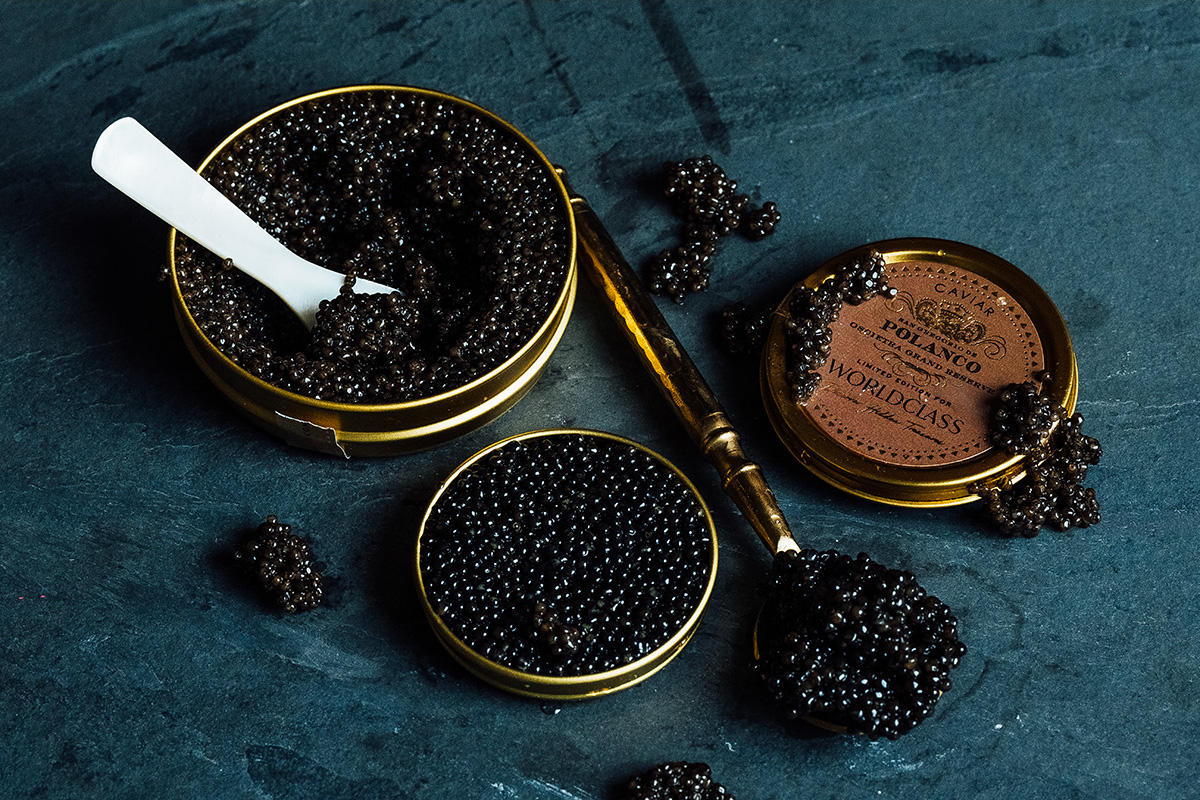
At WorldClass, we have two types of Russian Caviar, our Oscietra Caviar 6* and our Oscietra Grand Reserve Caviar.
Because of this balance, many chefs consider Oscietra the most versatile premium caviar.
Egg Characteristics and Flavor
Oscietra pearls measure roughly 2.8–3.2 mm and are known for their firm texture and satisfying pop.
Color ranges widely from dark amber and bronze to golden brown, depending on the maturity of the fish.
Its flavor profile is distinctive:
- nutty notes reminiscent of hazelnut or walnut
- balanced salinity
- creamy, lingering finish
Chef Insight
Oscietra’s texture allows it to maintain its structure even when used on warm dishes, making it a dependable option for plated service.
Culinary Applications
Oscietra adapts easily to both traditional and contemporary presentations.
Chefs frequently use it with:
- beef carpaccio or tartare
- pan-seared scallops
- risotto or pasta courses
- tasting menu garnishes
It is also commonly featured in luxury breakfast service or caviar tastings.
Pairings
Its nutty complexity pairs beautifully with:
- Brut Champagne
- Chablis
- Sancerre
- chilled vodka or aquavit
Siberian Caviar (Acipenser baerii)
Siberian caviar has become one of the most widely used premium caviars in contemporary gastronomy. The Acipenser baerii sturgeon adapts extremely well to aquaculture, allowing for consistent and sustainable production.
At WorldClass, we have two types of Siberian Caviar, our Polanco Siberian Reserve and our Antonius Siberian Caviar 6*.
For many restaurants, it offers an approachable entry point into luxury roe.
Egg Characteristics and Flavor
Siberian pearls measure 1.5–2 mm, slightly smaller than Oscietra but still elegant.
Typical characteristics include:
- dark gray to brown coloring
- clean, fresh flavor
- mild salinity
- smooth buttery finish
Compared with Oscietra, Siberian caviar is less nutty but highly versatile.
Chef Insight
Its clean flavor allows it to complement delicate ingredients without dominating them.
Culinary Applications
Because of its accessibility, Siberian caviar can be used more generously across a menu.
Popular applications include:
- seafood crudos
- scrambled eggs
- potato dishes
- canapé service
Sterlet Caviar (Acipenser ruthenus)
Sterlet caviar offers a delicate and refined alternative among traditional sturgeon varieties. Produced by the Acipenser ruthenus, it features smaller pearls and a subtle flavor profile that suits precise culinary applications.
Once overshadowed by larger species, Sterlet has gained renewed attention in modern fine dining.
Egg Characteristics and Flavor
Sterlet pearls measure approximately 1–1.5 mm, creating a fine, granular texture.
Color ranges from pale gold to amber.
Flavor is delicate and elegant:
- lightly buttery
- slightly sweet
- minimal brine
Culinary Applications
The smaller egg size makes Sterlet ideal for detailed plating.
Chefs frequently use it to finish:
- oysters
- scallops
- crudo dishes
- risotto
- chilled soups
Its subtle profile allows for more generous garnishing without overpowering a dish.
Kaluga Caviar (Huso dauricus)
Kaluga caviar, sometimes called “river gold,” is produced by the large Huso dauricus sturgeon native to the Amur River basin. Its flavor bridges the creamy richness of Beluga and the nutty depth of Oscietra.
This balance has made Kaluga increasingly popular in modern fine dining.
Egg Characteristics and Flavor
Kaluga pearls measure roughly 2–2.5 mm with a firm, satisfying texture.
Color typically ranges from golden brown to deep bronze.
Flavor characteristics include:
- nutty richness
- subtle butteriness
- smooth, clean finish
Culinary Applications
Kaluga works particularly well with delicate seafood and modern Asian-influenced cuisine.
Common pairings include:
- sashimi or crudo
- scallop ceviche
- chawanmushi
It also pairs well with Junmai Daiginjo sake or dry Riesling.
Sevruga Caviar (Acipenser stellatus)
Sevruga offers one of the boldest flavor profiles among classic sturgeon caviars. Produced by the Starry Sturgeon, it is known for its intense briny character.
Where Beluga emphasizes elegance, Sevruga provides culinary contrast.
Egg Characteristics and Flavor
Pearls measure about 1–1.5 mm and are typically dark gray to black.
Flavor is pronounced:
- briny
- mineral-driven
- distinctly oceanic
Chef Insight
Sevruga excels when used to cut through rich ingredients or anchor a dish with savory depth.
Culinary Applications
Because of its bold flavor, Sevruga pairs well with richer dishes such as:
- smoked salmon
- cured meats
- beef tartare
- seafood crudo
Some chefs incorporate it into compound butter or crème fraîche to create flavorful sauces.
American Caviar Varieties
Domestic caviar production has grown significantly thanks to advances in sustainable aquaculture. American farms now produce high-quality roe from several species, providing chefs with traceable and environmentally responsible options.
Two of the most common varieties come from Lake Sturgeon and Paddlefish.
Lake Sturgeon
Lake Sturgeon caviar features medium-sized pearls with a clean, nutty flavor that is often compared to classic Oscietra.
Its balanced profile makes it suitable for both traditional service and contemporary plating.
Paddlefish / Hackleback
Paddlefish caviar produces smaller, dark pearls with a more assertive flavor.
Expect:
- earthy notes
- mineral undertones
- slightly smoky finish
This stronger character allows Paddlefish roe to stand up to richer dishes and modern American cuisine.
Culinary Applications
American caviar’s accessibility makes it ideal for broader menu use, including:
- deviled eggs
- potato dishes
- risotto
- chilled soups
Pairings often highlight domestic beverages such as American sparkling wine, dry Riesling, or crisp craft lagers.
From Source to Service: Building a Thoughtful Caviar Program
Understanding the fish behind each variety allows chefs to approach caviar with greater precision and creativity. Rather than selecting roe based purely on prestige, kitchens can match each variety to the role it plays within a dish.
A few guiding principles help shape a successful caviar program:
Choose premium varieties for centerpiece service
Beluga, Oscietra, and Kaluga excel when caviar is intended to be the star of the plate.
Use versatile varieties across the menu
Siberian and American caviars provide luxury while remaining practical for broader applications.
Leverage bold varieties for contrast
Sevruga and Paddlefish offer assertive flavor that complements rich or savory dishes.
Finally, sourcing remains critical. Responsible aquaculture and traceable supply chains now define the modern caviar industry. Working with suppliers that prioritize transparency ensures both ethical sourcing and consistent quality.
At WorldClass, chefs gain access to carefully sourced, fully traceable caviar from leading producers around the world. From refined Oscietra to versatile Siberian selections, our curated portfolio helps professional kitchens deliver exceptional experiences with confidence.
.webp)

.webp)


